

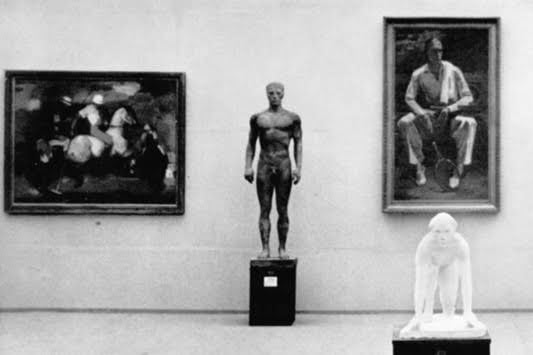
‘Abstract Composition’ submitted by Wassily Kandinsky to the Olympic Art Competition | 1st Art Gallery
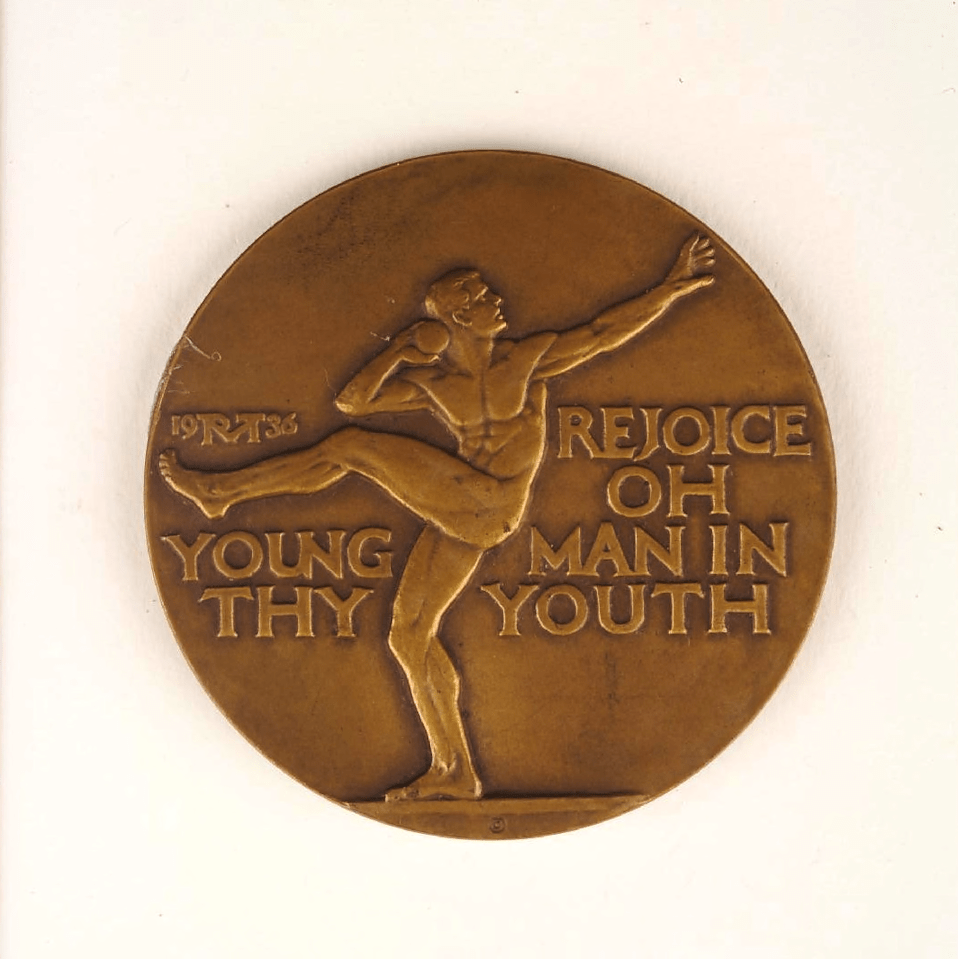
Few people know that the Olympics once awarded creatives alongside athletes. While competitors battled on the field, artists vied for their own bronze, silver and gold. From 1912 to 1952, over 140 medals were awarded across five categories: architecture, literature, music, painting and sculpture – collectively known as “The Pentathlon of the Muses”.
This was the brainchild of Baron Pierre Coubertin, founder of the modern Olympics and longtime advocate for integrating the arts into the games. Debuting at the 1912 Stockholm Games, the art contests produced notable winners, including Britain’s John Copley, who won silver in the 1948 engravings and etchings competition at 73 years old, making him the oldest Olympic medalist at the time. Yet despite such triumphs, the art contests were often overlooked. Marred by shifting rules, disputes and poor organisation, they were officially scrapped in 1954, setting off a steady decline. Initially replaced by a generic art exhibition, the role of the arts was later reduced to an optional arts program at the discretion of the host nation’s discretion. A far cry from Coubertin’s vision of competitive arts.
This shift from revered awards to passive inclusion raises an important question: How vital is it to formally recognise and award creativity?
Unequal Recognition: The Hierarchy of Creative Awards
In today’s society, creatives are awarded in many ways: the Grammys for music, the Oscars for film, the Pulitzer Prize for writing, the Turner Prize for visual art, the Cannes Lions for creative communications and more. At first glance, this breadth suggests that creativity is equally recognised across disciplines. But a closer look reveals a hierarchy of awards – one that places certain creative disciplines in the spotlight while leaving others to catch up.
Admittedly, video and audio are among the most widely consumed art forms today, with the film and music industries each generating billions in revenue per year. This popularity trickles down into awards culture, making the Oscars and Grammys the most anticipated ceremonies. While actors, musicians and directors are certainly deserving of praise, these awards reinforce a narrow definition of creative excellence in mainstream awarding bodies. Therefore, it is imperative to spotlight the contributory creatives who are often overlooked.
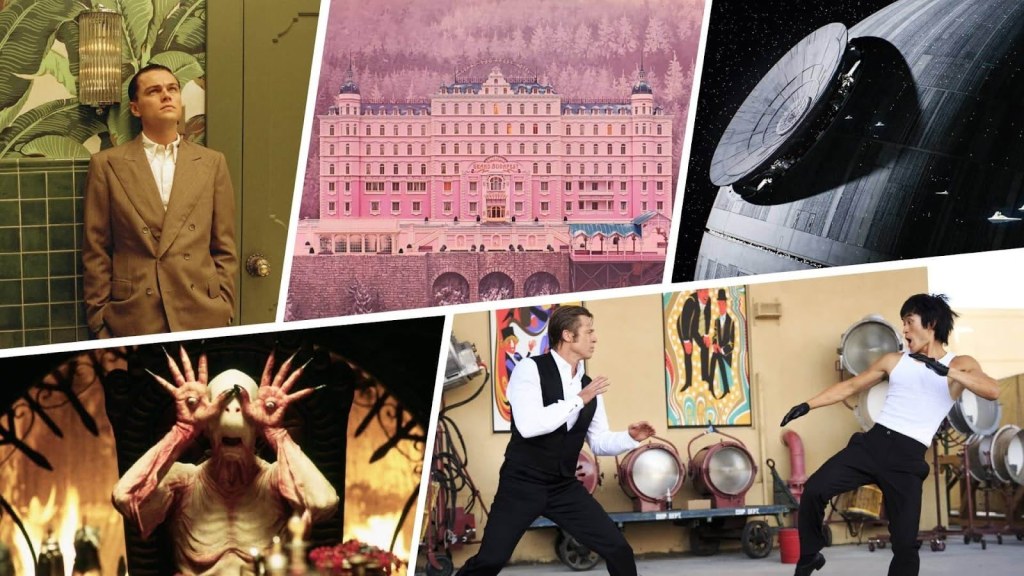
The Academy Award for Best Production Design has existed since the very first Oscars in 1929, yet Costume Design was not introduced until 1949, and Makeup and Hairstyling only received a dedicated award in 1981. In 2024, Charli XCX’s album ‘brat’ took the internet – and the streets – by storm with its unmistakable neon green aesthetic across merchandise, music videos, billboards and album covers. Its incorporation into Kamala Harris’ 2024 presidential campaign is testament to the album’s cultural reach. So it was no surprise that ‘brat’ won the 2024 Grammy Award for Best Recording Package, an award honouring album cover design and overall packaging. Rightfully awarded to the designers and art directors Imogene Strauss and Brent David Freaney, this win signifies a moment where typically overlooked creatives finally get their flowers.

Unfortunately, even when artistic contributions are particularly profound, these awards lack the same weight and visibility as headline categories like “Best Actor” or “Album of the Year.” While it may seem unwise to compete for attention, it’s no secret that global recognition shapes the perceived value of creative work and the people behind it. Too often, album artwork designers, stylists, producers, songwriters and colorists are undervalued as “behind-the scenes” roles – framed as frivolous additions rather than integral parts of the final product, especially by spectators outside the creative realm. This mirrors how the Olympic art contests were seen as a sideshow to the main sporting events, rather than an essential part of the Games. This is where art-focused awards play a vital role – awarding creativity in its own right.
Niche Awards and the ‘By Us, For Us’ Philosophy
The late Virgil Abloh once said, “Don’t wait to get chosen; start where you are, and do it yourself”. Such is the nature of the creative industry. From freelancing and self-funding initiatives to building from scratch, many creatives have learnt to forge their own path, creating out of necessity rather than waiting for a “bring in”. This hustle mindset permeates through the creative community, all the way to their awarding bodies.
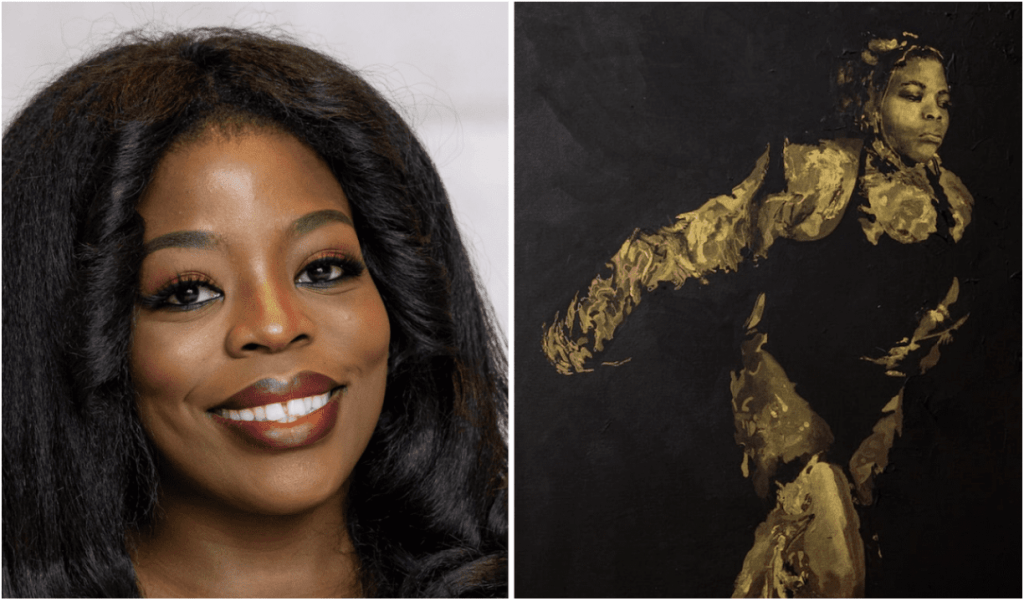
That’s how the D&AD awards came to be. Founded in 1962 by a group of London-based designers and art directors, it was born out of a desire to celebrate creative communication and raise industry standards in design and advertising. Similarly, The Norval Sovereign African Art Prize was launched in 2021 to increase international exposure for artists from Africa and the diaspora, similar to The Afroniche Society. This year’s winner, Modupeola Fadugba from Nigeria, was awarded for her striking acrylic painting, Portrait of an Artist at Ease.
The common thread is “by us, for us”. Creatives are best placed to spotlight and award talent within our own circles – celebrating established names and up and coming talent. It’s our responsibility to set the standard and amplify the niche creative awards that already exist.
But amplification alone is not enough, these awards must continue evolving to match the changing creative landscape. Art competitions have existed for centuries. In 1401, Florence (Italy) held one of the earliest recorded contests, commissioning an artist to design a pair of bronze doors for the Baptistry of St. John, the city’s oldest church. While many of today’s prestigious creative competitions still focus on traditional disciplines, newer awards have expanded to reflect contemporary fields like game design, creative coding, spatial design, UX design, NFTs and AI-generated art.
A Space for All

In other cases, entirely new competitions have emerged to honour these disciplines in their own right. For example, The Lumen Prize champions technology-driven creativity across nine diverse categories, including still image, moving image, performance & music, fashion & design, hybrid (digital/physical), experiential, literature & poetry, nature & climate, and identity & culture.
Niche creative awards will continue to grow, as long as they maintain a specialised offering and genuinely serve unseen creatives. Supported by strategic advertising to build excitement and lasting awareness, they can carve out their place in the industry and gain the prestige needed to stand alongside mainstream awards. While it’s best to make art for art’s sake rather than solely for exposure or awards, it’s reassuring to think that the next generation’s amateur artist might one day hold an award with the same pride as an Olympic medalist.

 The ANS Archives
Leave a comment