
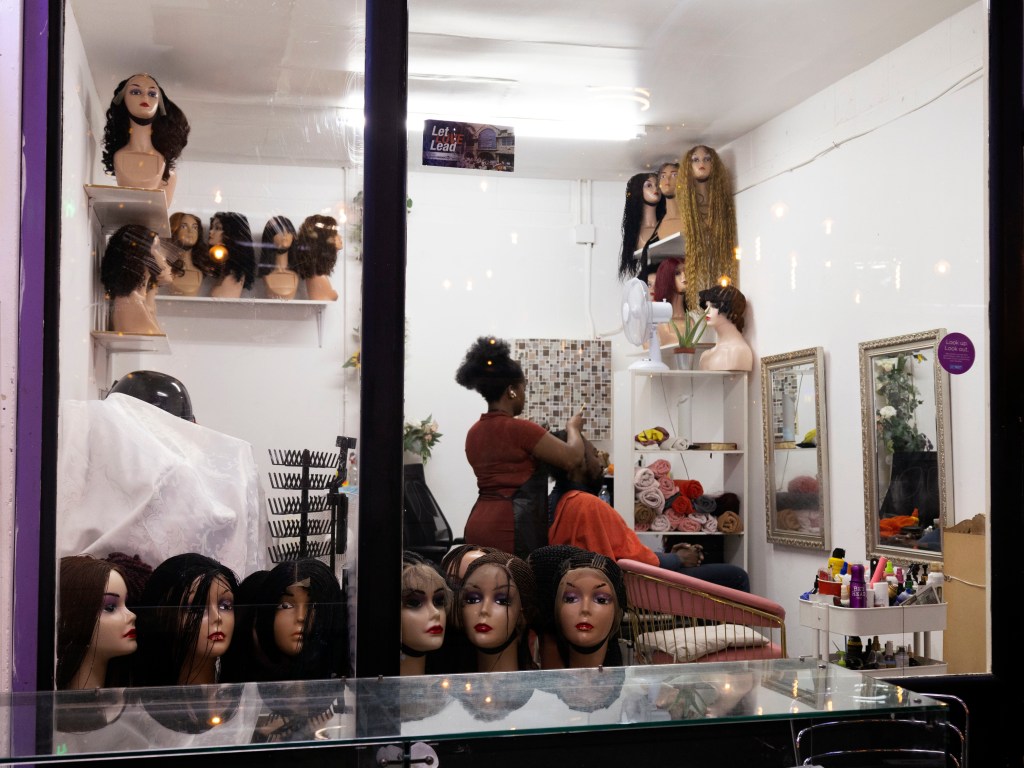
5 Reasons Why You Don’t Visit Peckham
1. It’s Peckham.
2. Aunty hasn’t sent you to Rye Lane market.
3. You think your braids still have another three weeks in them (they don’t).
4. You have boycotted all the Asian-owned Black hair shops.
5. You are from North London and think crossing the river needs a passport.
These are some of my observations of Peckham, in the London Borough of Southwark, which has the highest Black African population, according to the 2021 Census. Experts in urban planning might call these “smart-mouthed” indicators of a neighbourhood’s character.
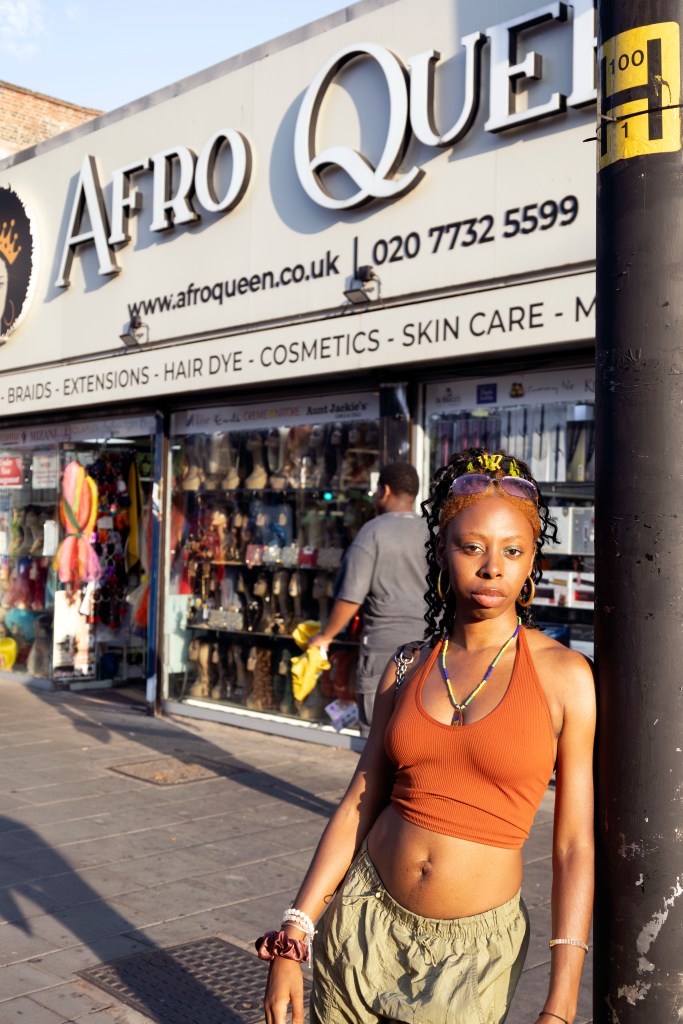
Only 1.4% of Urban planners in the UK are Black. There is an underrepresentation of Black people within the profession that plays a significant role in shaping the places where communities live. As a multidisciplinary creative and spatial practitioner working across cultural heritage and the built environment, I am interested in producing new narratives of places, told by the people who live there. A few years ago, I worked on a culture and architecture project in Croydon, another South London borough, which aimed to increase residents’ engagement and amplify their voices within the built environment and urban planning processes.
This work showed me the value of looking beyond conventional planning policy to understand how communities give meaning to places. It also shapes how I look at Peckham, particularly the ways Black businesses, relationships, and cultural practices contribute to its identity.
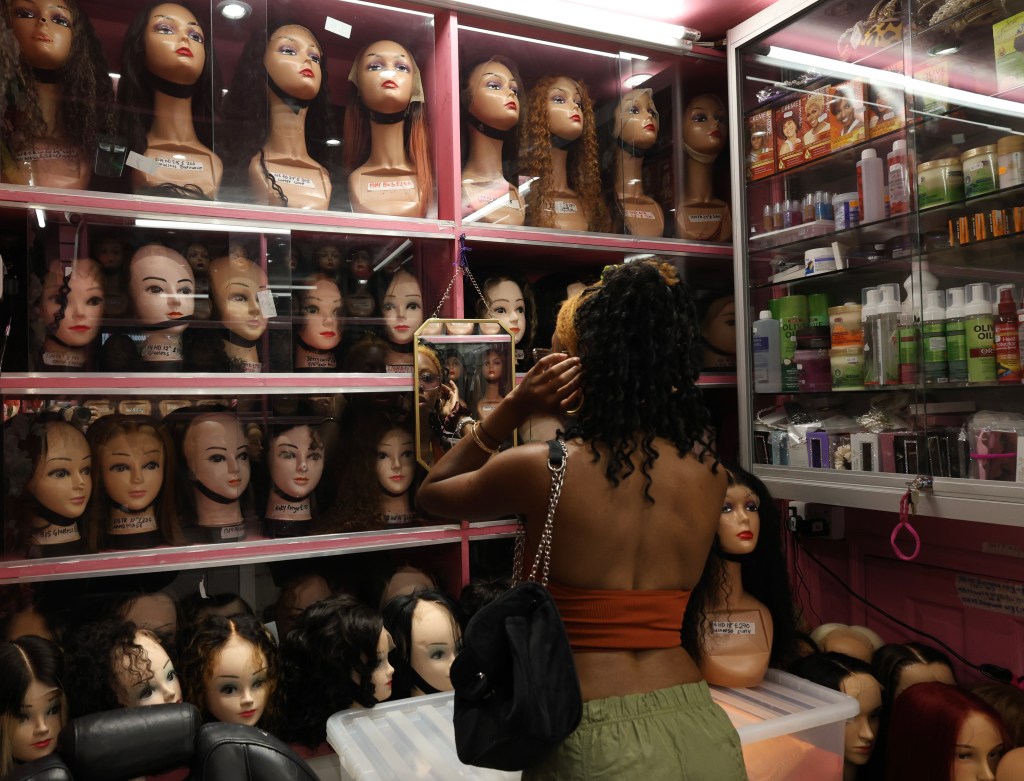
A significant part of my experience of Peckham has involved the routine of getting my hair braided. With a large West African community and a concentration of Black-owned businesses, including hair salons, I often find myself sitting in the salon chair and imagining more for the hairdressers. What if these salons had larger spaces with improved ventilation, comfortable waiting areas, a small library, dedicated childcare or a community kitchen? What if Black hair businesses were supported as vital civic spaces rather than treated as retail units? This is where dreaming shifts into planning.
My approach to planning starts with taking these everyday experiences seriously.
1. Vision: How Blackity Black can I make a city?
2. Theory: What kinds of neighbourhoods would allow Black women not only to survive, but to commune, build businesses and generate wealth?
3. Practical: How close should the hairdresser be to the Caribbean takeaway that a client visits after their appointment?
Urban Planning
A quick run down for the community. What is Planning?
Planning determines how land is used, what gets protected, where investment goes, and whose histories become visible. Southwark’s Local Plan, developed in 2022, considers housing, transport, heritage, conservation, employment, and public space. The document recognises physical infrastructure such as roads, social infrastructure like libraries and parks, and cultural infrastructure such as museums and theatres. However, established planning frameworks often fail to capture the informal cultural systems that allow communities to belong and thrive.
Design, architecture, and planning can establish values and traditions that shape how populations interact, evolve, and remember their past and present cultures through infrastructure and policy. Instead of only prioritising physical infrastructure, urban design should factor cultural practices, visual language, and human interaction as assets integral to the built environment. The Black hair economy simultaneously creates a sense of safety, supports wellbeing, strengthens local economies, and produces a distinctive urban character.
Hair as Spatial Infrastructure
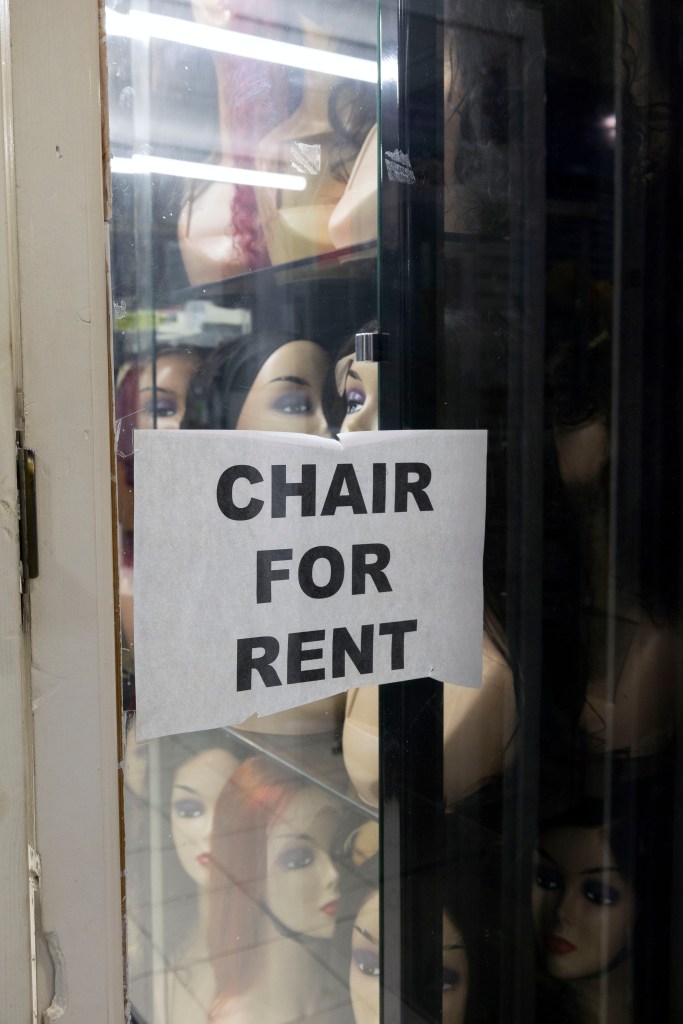
“Darling, do you want to do your hair?”
Black hair businesses in Peckham are more than hair salons; they function as cultural and spatial infrastructure, creating connection, care and community. When I hear Peckham, I think about the Black community there. And when I think about hair in Peckham, I can hear an auntie’s voice hollering at me from an unknown direction. Hair is not just style. The businesses and relationships formed through getting your hair done are part of the social and cultural infrastructure that makes Peckham what it is. Salons in Peckham function as a place of anchorage for the West African diaspora. It’s an area where the community has established stability and women’s businesses offer shared language, cultural understanding, and emotional support.
Historic England, the government body responsible for protecting England’s historic environment, argues that placemaking is “best achieved through a clear understanding of the historic significance of the existing place”. This highlights the importance of understanding not only a neighbourhood’s physical history, but also the relationships people have formed with it over time. In the UK, this requires acknowledging its relationships shaped by a history of colonialism, labour and migration. Following the 1948 British Nationality Act, which granted citizenship to nationals of Commonwealth countries, migration from former British colonies, including West Africa and the Caribbean, contributed to the growth of Black communities, economies and networks of enterprise across London. Many migrated in search of economic opportunity amid the lasting effects of colonialism, while facing significant racial discrimination upon arrival. These histories continue to shape London’s present-day inequalities and the ways communities establish themselves within the city. Yet Black communities are not simply products of this history; they actively reshape the places they inhabit. In Peckham, Black Women’s businesses and cultural practices are part of this ongoing process, transforming the area according to their own cultural values, social needs.
Women’s Ways of Knowing
Black women’s hair businesses are living economic ecosystems. They provide for the community through the everyday acts of entrepreneurship, care and cultural exchange that have helped build a mini West Africa within Southwark.
These contributions should be recognised as vital forms of spatial knowledge alongside conventional planning evidence. Black Females in Architecture, a social enterprise and membership organisation for Black Female Architects, uses the concept of Women’s Ways of Knowing to challenge traditional hierarchies of knowledge in spatial planning. Rather than relying solely on official architectural or academic authority, it validates embodied, relational, and lived forms of knowledge. In Peckham, West African women’s businesses have produced new urban insights through daily acts of care and entrepreneurship. This perspective redefines what counts as urban knowledge, acknowledging that conversations in a hair salon and relationships built in local markets are significant forms of placemaking. These spaces demonstrate the often-overlooked work of women whose labour has transformed London’s post-colonial landscape into one defined by cultural continuity, memory, and community.
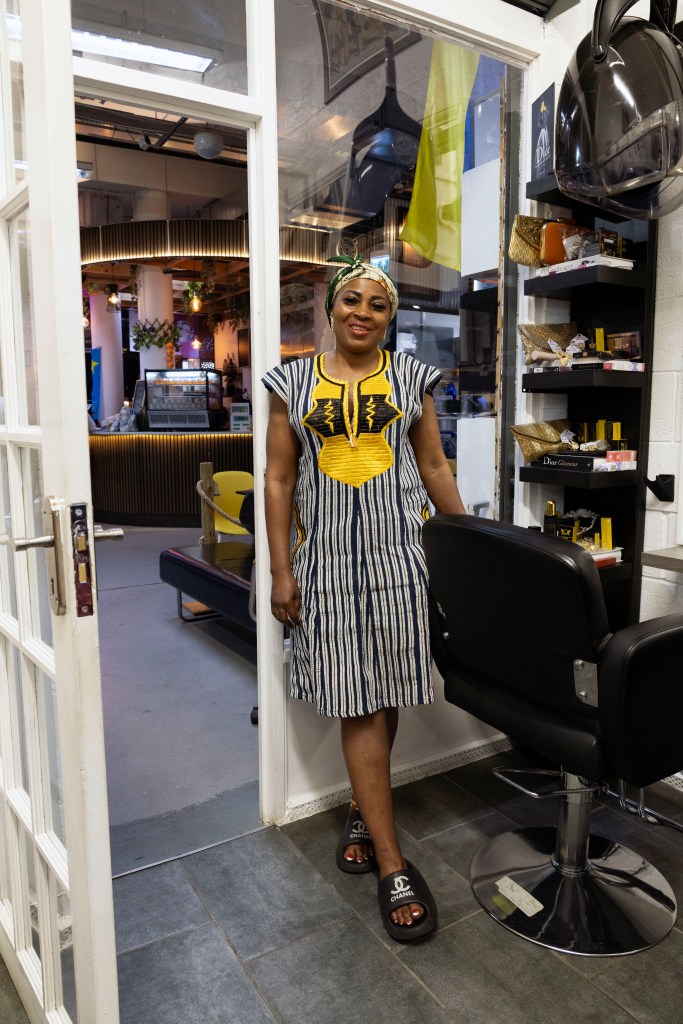
In my conversation with Laulau, in the photograph above, about the types of support she would like to see from Southwark Council, she highlighted the need for professional development, particularly access to qualifications in Black hair care. However, completing further training requires both time and money, which poses a challenge for small independent businesses. Local government funding or support programmes could therefore play an important role in enabling hair professionals to access skills training.
This resonated a lot for me because I am allergic to nuts, which are contained in a lot of hair
products, and synthetic hair drives my already sensitive scalp mad. I think there is a huge
difference between hairstyling versus hair care and it is important for me to be able to support
local Black businesses, and not sacrifice a standard in quality care. Black Women don’t play
about their hair, neither should Southwark Council.
Conclusion
In response to change and development in Peckham, in 2009, Historic England produced the Central Peckham Historic Area Assessment. In agreement with Southwark, it identified the need for more information on Peckham’s history. Again the goal was to move beyond documenting buildings, but to further analyse its distinction and significance. This was a new approach commissioned by The London Region of Planning and Development. Similarly, when I refer to Black hair businesses, I am not just talking about shops or salons. I am referring to the relational trust and a sense of safety that has been built in the community over decades. These are the everyday social systems that define Peckham.
If planning begins to recognise these systems as cultural infrastructure then regeneration must consider what happens when these networks are disrupted. For example, Berkeley’s new housing proposals will reshape key sites such as the Aylesham Centre and Morrisons. Developers and Southwark Council must consider their impact on the existing social relationships and people’s relationship to the place, which allows Peckham to continue to be. As Peckham goes through gentrification and increasing change, existing social systems become more significant because they represent forms of heritage at risk. It goes without saying that the hair salons are heritage sites and informal archives, and an essential heart of the community in the same way the big Morrisons is valued as a place of everyday continuity.
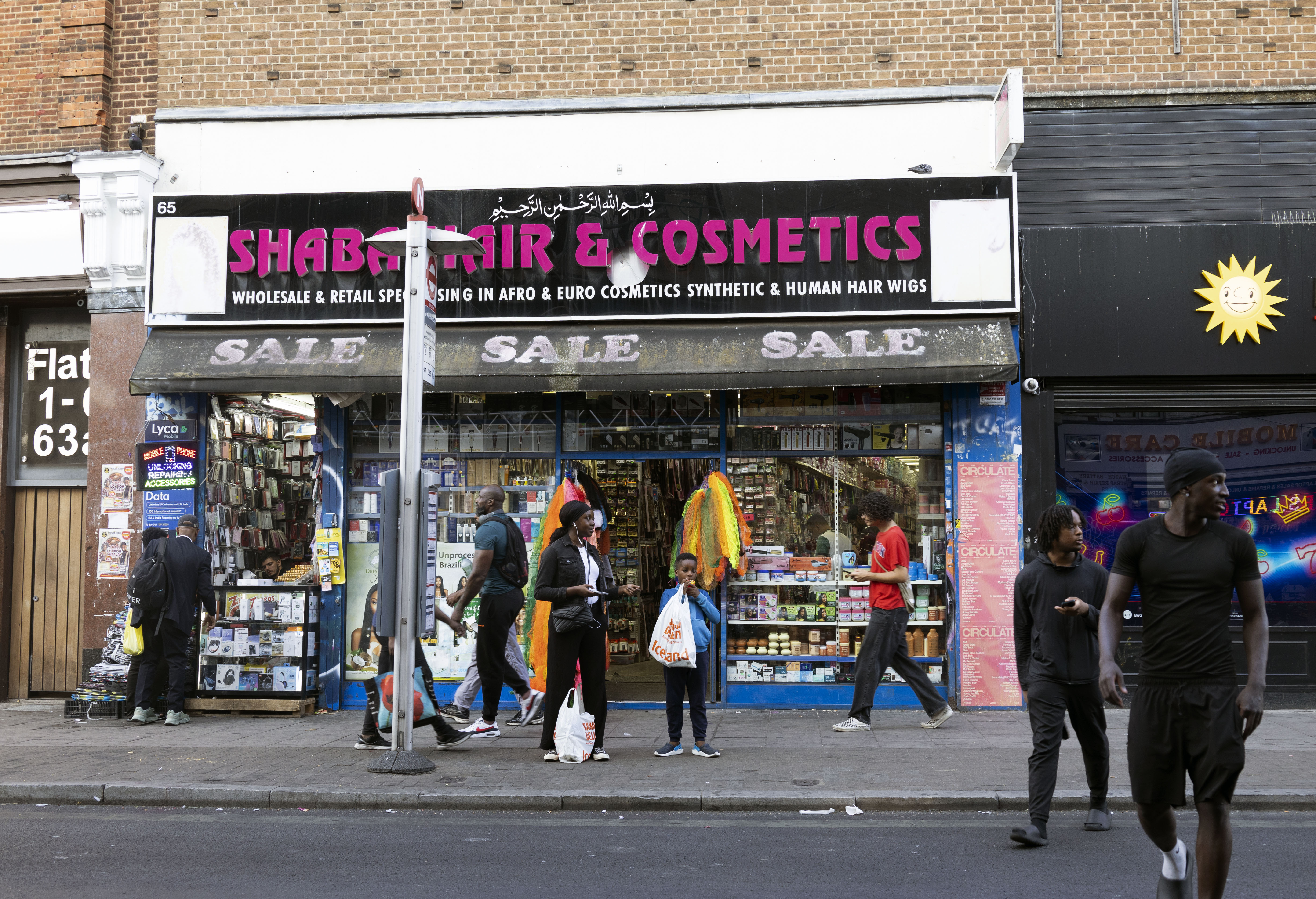
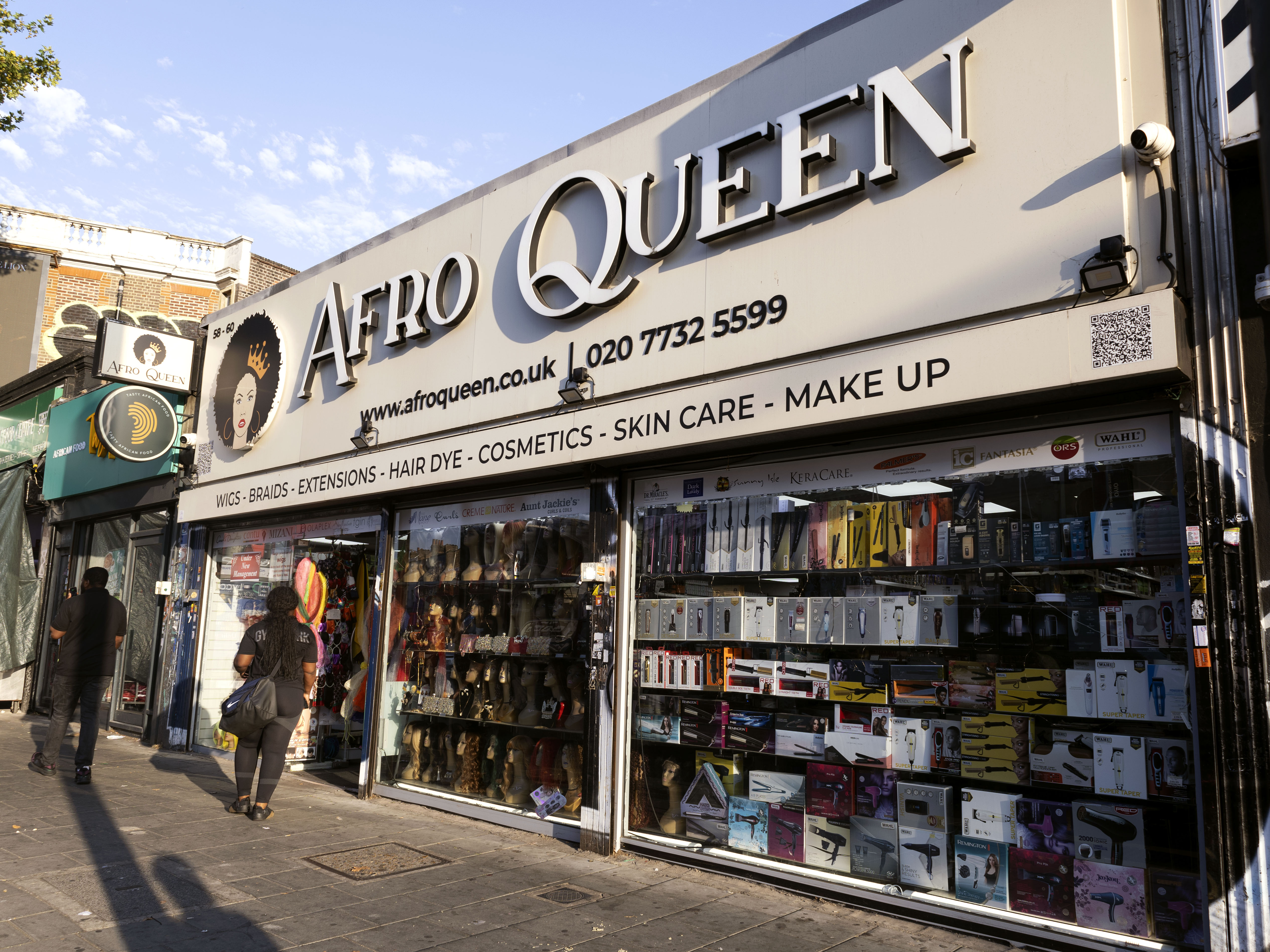
Peckham demonstrates how planning can move beyond preserving buildings to sustaining the relationships that make places meaningful. This means recognising Black hair salons as cultural infrastructure: spaces that provide not only economic opportunities, but access to connection and community. Urban Planning in Peckham must therefore centre the experiences of Black Women and the West African diaspora, when shaping the public and commercial spaces they use. The success of development in Peckham should not be measured only by the number of new developments, but by whether the West African communities that have helped shape its identity can continue to see themselves, their businesses, and their ways of living reflected in the neighbourhood.
Reference List
- Photography: Marianna Slawinska @mariannaslawinska | https://www.instagram.com/mariannaslawinska
- Area Character Study, 2023 | https://cdn.southwark.gov.uk/docs/Peckham_Area_Character_Study_accessible.pdf
- African London, 2015 | https://www.blackhistorymonth.org.uk/article/section/real-stories/african-london/
- Central Peckham Historic Area Assessment, 2009 | https://historicengland.org.uk/research/results/reports/54-2009
- Southwark Plan, 2022 | https://www.southwark.gov.uk/sites/default/files/2024-09/Southwark%20Plan%202022%20reduced%201.pdf
- State of the Profession, 2025: England, 2025 | https://www.rtpi.org.uk/policy-and-research/state-of-the-profession-2025/state-of-the-profession-2025-england/
- The Aylesham Peckham | https://theayleshamcentre.community
- The MA Showcase Accra, 2025 | https://www.blackfemarc.com/the-ma-showcase-accra
- Trust for London | https://trustforlondon.org.uk/data/ethnic-diversity/
- What is Pride in Place, 2025 | https://www.gov.uk/government/news/what-is-pride-in-place


Leave a Reply